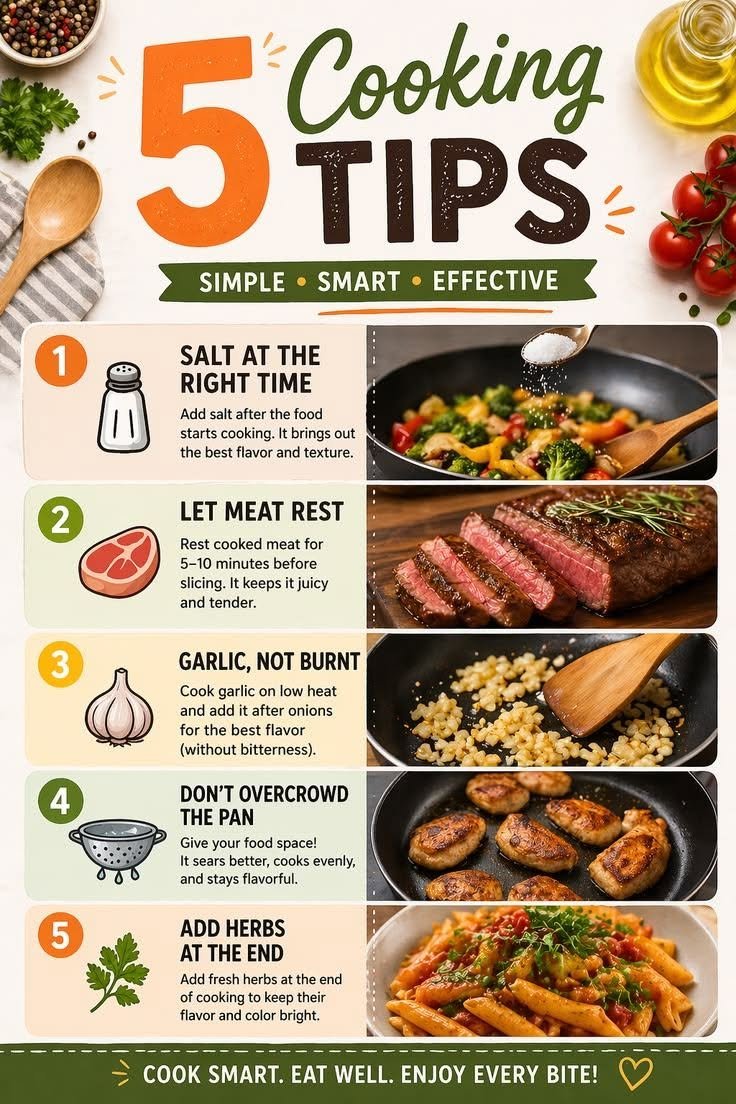
Hardy herbs such as rosemary and thyme can handle longer cooking.
Delicate herbs such as parsley and cilantro are often better added near the end so their fresh flavor doesn’t disappear.
10. Taste Before Serving
Don’t wait until the food is already on the table.
Taste your dish near the end and ask:
- Does it need salt?
- Does it need acidity?
- Is it too rich?
- Does it need more herbs?
- Is there enough seasoning?
Small adjustments at this stage can make a huge difference.
11. Finish With Something Fresh
A finished dish can benefit from a final ingredient that adds contrast.
Try:
- Fresh lemon
- Chopped parsley
- Cilantro
- Green onions
- Freshly ground pepper
- A drizzle of good olive oil
That final contrast can make a heavy dish feel much brighter.
 The Biggest Upgrade
If you only remember three things, remember these:
Dry your ingredients → heat your pan → don’t overcrowd it.
Those three habits alone can dramatically improve browning and texture.
 Final Tip
When your food tastes “okay” but something seems missing, don’t automatically add more seasoning. Try thinking about contrast instead: salty + acidic, rich + fresh, crispy + creamy, or spicy + sweet.
That’s often what turns an ordinary homemade meal into something that tastes much more intentional.