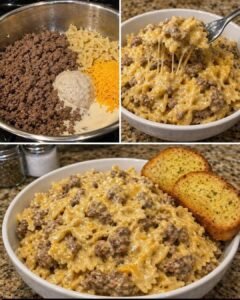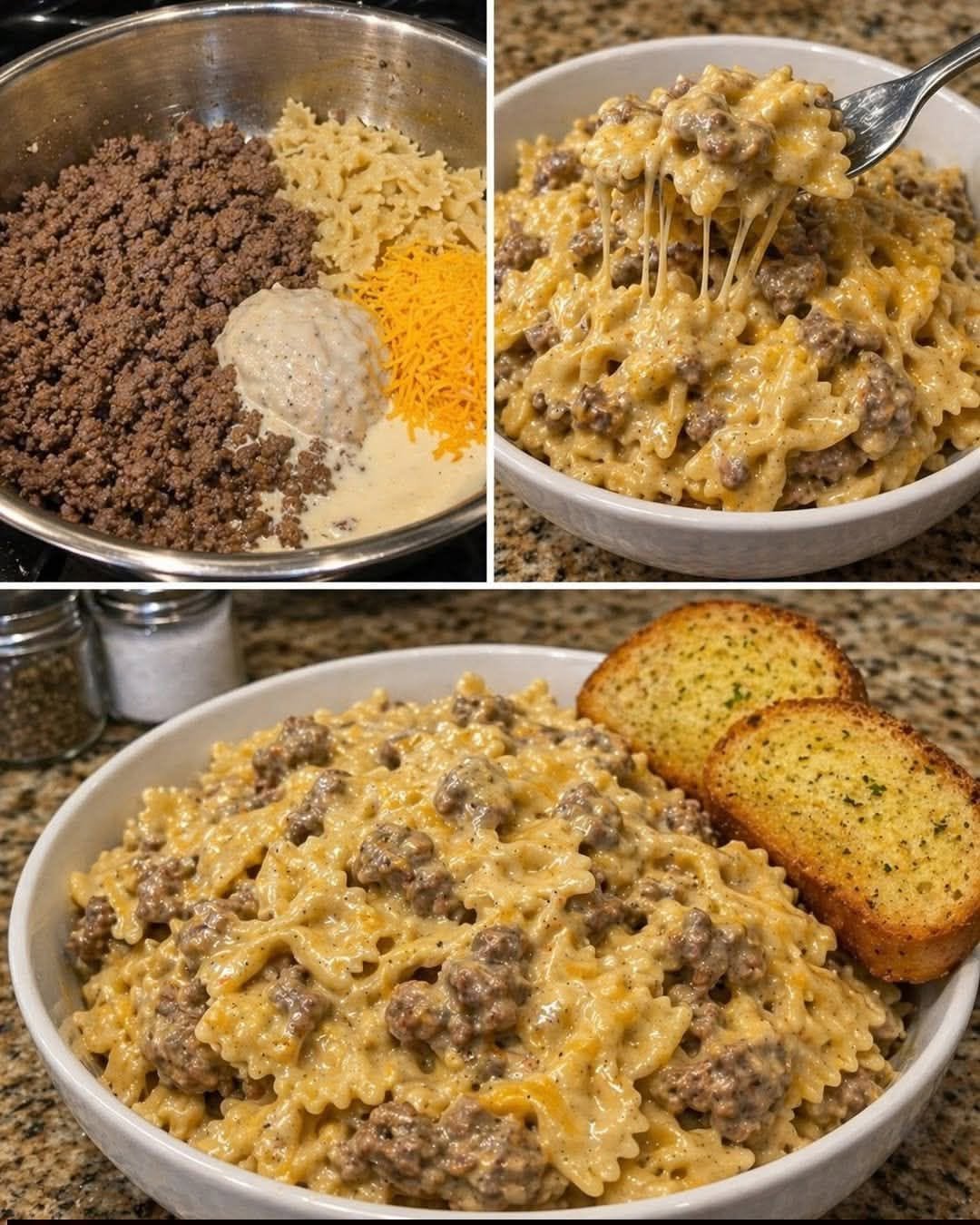
Creamy One-Pot Beef and Shells
One-pot pasta dishes with ground beef and a creamy tomato sauce occupy a particular niche in weeknight cooking — they’re faster than a proper pasta bake, simpler than a multi-component sauce, and more satisfying than a jar of marinara over boiled pasta. This version delivers on all of those qualities, with a sauce built from beef broth, heavy cream, tomato paste, Italian seasoning, and sharp cheddar that cooks together with the pasta in a single Dutch oven and produces something that tastes genuinely layered and rich from a preparation that takes about thirty minutes from start to finish.
The technique is the recipe’s most important feature: the uncooked pasta shells go in on top of the browned beef before the liquid is added, and they cook directly in the creamy sauce rather than in separate salted water. This means the shells absorb the savory, tomato-cream liquid as they hydrate, becoming fully flavored from the inside out rather than simply being coated on the surface by sauce added after the fact. The starch the shells release as they cook also thickens the sauce naturally, creating a sauce that clings to the pasta in a way that separately-cooked pasta in a separately-made sauce never quite manages. One pot, thirty minutes, and a dish that genuinely tastes like more effort went into it.
Why Cook the Pasta in the Sauce?
Conventional wisdom says to cook pasta in a large pot of well-salted boiling water — separate from any sauce, drained, then combined. This produces perfectly cooked pasta with good texture, but it also means the pasta absorbs only water during its cook, leaving it flavorless at the core. Sauce is then added to the exterior. In a one-pot pasta dish where the pasta cooks directly in the sauce, the liquid the pasta absorbs is the flavored cooking liquid — beef broth, cream, tomato paste, seasoning — rather than plain water. The pasta becomes flavored from the inside, not just coated from the outside. The starch the pasta releases also thickens the cooking liquid, helping it transition from a pourable sauce to a coating one as the cook progresses. The trade-off is slightly less textural precision — one-pot pasta can be harder to get exactly al dente — but the flavor advantage is substantial and most people find the result considerably more satisfying than the conventional approach for this style of dish.
Why You’ll Love This Recipe
This is a weeknight dinner that genuinely delivers on its promise without requiring anything unusual. The Dutch oven does all the cooking in one vessel — browning the beef, building the sauce, cooking the pasta — and the whole process takes about thirty minutes. The result is a proper, satisfying meal: creamy, cheesy, savory, with the ground beef distributed throughout and the pasta fully coated in sauce. It serves six and reheats well, which makes it a practical choice for families where leftovers matter.
The flavor profile — ground beef, tomato, cream, Italian seasoning, sharp cheddar — is universally appealing and accessible. It’s the kind of dish that works for children and adults alike, that doesn’t require anyone at the table to be adventurous, and that consistently earns the response that justifies keeping it in the regular rotation: everyone ate it and wants it again.
Ingredient Notes
Ground beef — 1½ pounds, 80 to 90% lean — is the protein. Brown it properly in the Dutch oven before anything else goes in — proper browning through the Maillard reaction produces savory depth that steamed or grey ground beef doesn’t have, and that depth carries through into the finished sauce. Use a hot Dutch oven with a small amount of oil, break the beef into small crumbles, and allow it to sit in contact with the hot surface long enough to develop actual brown color rather than just cooking to grey. Drain off most of the excess fat after browning — leaving a tablespoon or so adds flavor, but too much fat makes the finished sauce greasy.
Onion and garlic — one medium yellow onion finely diced, two cloves garlic minced — are cooked first before the beef goes in. Softening the onion in olive oil for 3 to 4 minutes produces a sweeter, more mellow base than adding raw onion to the pot; the garlic is added in the last 30 seconds before the beef so it doesn’t burn before the moisture of the beef tones down the heat.
Medium pasta shells — 12 ounces, uncooked — are the pasta. Medium shells are well-suited to one-pot cooking: their size is proportionate to the other components, they cook in approximately the same time as the sauce needs to develop, and their cup shape catches and holds the creamy sauce inside each shell in a satisfying way. Small shells cook faster and can become overcooked before the sauce thickens; large shells need more time and more liquid. Penne rigate, rotini, and cavatappi are all good alternatives if shells aren’t available — any medium pasta shape that cooks in 12 to 15 minutes at a low simmer works.
Beef broth — 2 cups — is the primary cooking liquid that the pasta absorbs during the cook. It provides the savory, robust foundation for the sauce. Low-sodium is recommended since the tomato paste, Italian seasoning, and cheese all contribute salt.
Heavy cream — 1½ cups — is the dairy component that makes the sauce genuinely creamy rather than tomato-forward. The combination of beef broth and heavy cream produces a sauce that’s savory, rich, and well-balanced — neither a pure cream sauce nor a plain tomato sauce but something that has the qualities of both. Half-and-half can be substituted for a lighter result; the sauce will be less coating and rich but still very good.
Tomato paste — 3 tablespoons — provides concentrated tomato flavor that deepens the sauce without adding significant liquid. It’s the ingredient that gives the sauce its characteristic savory-sweet tomato depth and the slightly orange-tinted color of the finished dish. Whisked into the broth and cream mixture before adding, it distributes evenly through the sauce.
Italian seasoning — 2 teaspoons — provides the herb backdrop of the sauce. A teaspoon per pound of beef is the right amount for a clearly herb-flavored sauce without any single herb dominating. Italian seasoning blends typically contain basil, oregano, thyme, and sometimes rosemary and sage.
Sharp cheddar cheese — 1½ cups shredded, divided — is the cheese component. Adding it in two stages — one cup whisked into the liquid mixture before cooking, and half a cup stirred in at the very end off the heat — produces a more thoroughly cheese-flavored sauce and a final smooth, velvety finish. Sharp cheddar provides enough flavor to be clearly present in the sauce; mild cheddar would be nearly invisible after cooking. Freshly shredded block cheddar melts more smoothly than pre-shredded.
Ingredients
1 tbsp olive oil
1 medium yellow onion, finely diced
2 cloves garlic, minced
1½ lbs ground beef (80–90% lean)
1 tsp kosher salt, plus more to taste
½ tsp black pepper
12 oz uncooked medium pasta shells
2 cups beef broth
1½ cups heavy cream
3 tbsp tomato paste
2 tsp Italian seasoning
1½ cups shredded sharp cheddar cheese, divided
¼ tsp crushed red pepper flakes (optional)
Parmesan and fresh parsley, for serving (optional)
see continuation on next page