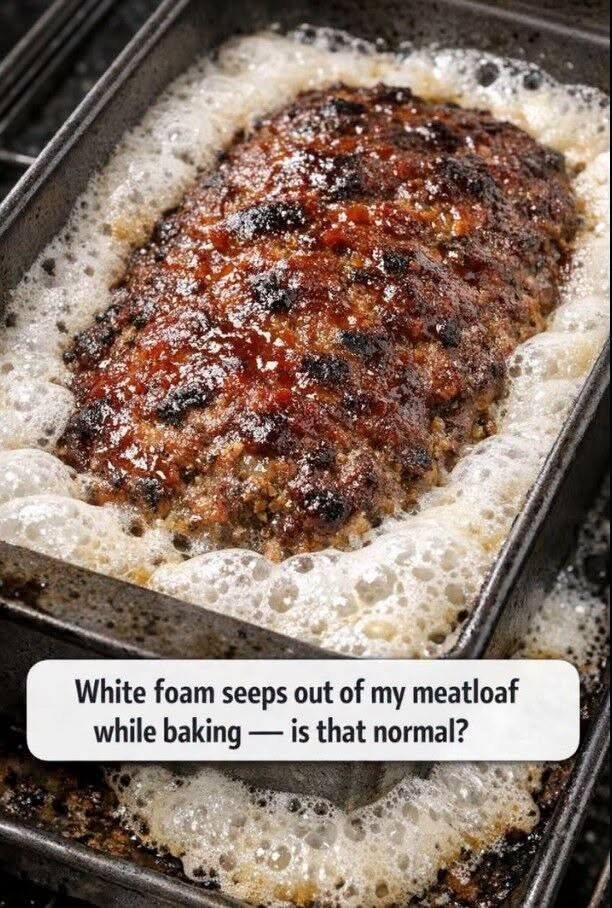
There are few things more comforting than a homemade meatloaf baking in the oven. The savory aroma fills the kitchen, the edges begin to brown, and everyone starts wondering when dinner will be ready. But then you notice something unexpected: a strange white foam or creamy-looking substance is bubbling out of the meatloaf.
At first glance, it can look alarming. You might wonder whether the meat has spoiled, whether something went wrong with the recipe, or whether the white substance means the meatloaf isn’t safe to eat.
Fortunately, in many cases, there is a simple explanation. The white foam that appears while meatloaf cooks is often a combination of proteins, moisture, and rendered fat reacting to heat. Ground meat contains plenty of proteins and fat, and as the loaf heats, those components can separate from the meat mixture and collect on the surface or around the edges.
That means the appearance of white foam doesn’t automatically mean something is wrong. However, proper handling and cooking are still essential, especially because meatloaf is made with ground meat. USDA recommends cooking ground beef and other ground meats to an internal temperature of 160°F (71.1°C), measured with a food thermometer.
What Is the White Foam on Meatloaf?
The white substance that appears during baking is usually not a mysterious ingredient or sign of contamination. It is often a mixture of cooked proteins, melted fat, and moisture that has been pushed toward the surface as the meatloaf heats.
Ground meat behaves differently from a whole cut of meat because grinding breaks the meat into many small pieces. That creates a large amount of exposed surface area and changes the way proteins, fat, and moisture interact during cooking.
As the oven heats the meatloaf, proteins begin to change structure and firm up. At the same time, fat melts and juices move through the loaf. Some of these components can collect around the outside and develop a pale, foamy appearance.
The result may look unusual, but it can simply be part of the cooking process.
Why Does Meatloaf Produce Foam?
Heat causes several things to happen simultaneously inside a meatloaf.
First, the proteins in the meat begin to denature and coagulate. In simple terms, their structure changes as they are heated, causing them to firm up.
Second, the fat inside the meat begins to melt. Depending on the type and fat content of the ground meat, a considerable amount of fat may be released during cooking.
Third, moisture is driven out of the meat as the temperature rises. When moisture, melted fat, and proteins interact, they can create a light, pale mixture that resembles foam.
This is particularly noticeable when the meatloaf contains a relatively high amount of fat.
So while the white substance may look unpleasant, it doesn’t necessarily indicate spoilage. It can simply be evidence that the meat is undergoing normal physical and chemical changes during cooking.
Is White Foam a Sign That the Meat Is Spoiled?
Usually, not by itself.
The fact that white foam appears while meatloaf is baking does not automatically mean that the meat was spoiled before cooking. In many cases, the foam is simply a cooking byproduct.
However, you should always consider the condition of the meat before it went into the oven.
If the raw ground meat had an obviously unpleasant odor, a sticky or slimy texture, or had been stored improperly, you should not rely on cooking to make questionable meat safe.
USDA points out that harmful bacteria cannot reliably be identified by sight, smell, or taste. That’s why safe storage, handling, and proper cooking temperatures are so important.
In other words, the foam itself isn’t a reliable food-safety test.
Fat Content Can Make a Big Difference
The type of ground meat you use can influence how much white residue or foam you see.
A meatloaf made with ground beef that contains more fat may release a noticeable amount of melted fat during baking. Ground pork can behave similarly.
Leaner ground meats may produce less visible fat, although they can still release proteins and moisture during cooking.
This is one reason two meatloaf recipes prepared in almost exactly the same way can look completely different in the oven.
A particularly rich mixture may release enough fat and protein to create a noticeable pale layer around the edges, while a leaner mixture may appear much cleaner.
Do Eggs Cause the White Foam?
Eggs can also influence what happens during baking.
Many traditional meatloaf recipes contain eggs because they help bind the ingredients together. Eggs themselves contain proteins, and those proteins also change as they are heated.
When combined with ground meat, breadcrumbs, milk, seasonings, and other ingredients, the final mixture becomes a complex combination of proteins, fats, and moisture.
This doesn’t mean you should remove eggs from your meatloaf simply to prevent foam. Eggs serve an important purpose in many recipes, particularly when you want the loaf to hold together well.
If a small amount of white foam appears, appearance alone isn’t a reason to change a recipe that otherwise works well.
What About Milk and Breadcrumbs?
Milk and breadcrumbs are common meatloaf ingredients, and they affect the moisture and texture of the finished dish.
Breadcrumbs can absorb liquid and help create a softer, more cohesive texture. Milk adds moisture and can help prevent the finished meatloaf from becoming overly dense.
The exact effect depends on the recipe and proportions, but these ingredients can change how much liquid is available to move through the meat mixture during baking.
So if you change the amount of milk, breadcrumbs, eggs, or meat in a recipe, you may notice a difference in how the meatloaf behaves in the oven.
Does the Baking Temperature Matter?
Absolutely.
The temperature of the oven affects how quickly the meatloaf heats and how quickly its fat and moisture are released.
Very aggressive heating can encourage faster rendering of fat and movement of juices. A more moderate cooking process may produce a different surface appearance.
However, don’t lower the oven temperature solely because you dislike the appearance of foam. The primary goal should always be cooking the meatloaf safely and properly.
Instead of judging doneness by the amount of foam, use a food thermometer.
For meatloaf made with ground beef, pork, veal, or lamb, USDA recommends reaching 160°F (71.1°C) internally. If the meatloaf contains ground poultry such as turkey or chicken, the recommended safe minimum internal temperature is 165°F (73.9°C).
Don’t Judge Doneness by Color Alone
Another common mistake is assuming that meatloaf is safe because the outside looks brown.
The opposite can also happen: a meatloaf may still have some pink color even after reaching a safe temperature.
USDA specifically advises using a food thermometer rather than relying solely on color to determine whether ground meat has been cooked safely. Ground beef can remain somewhat pink even after reaching the recommended temperature.
That’s why the thermometer is much more useful than staring at the surface of the meatloaf.
Insert the thermometer into the thickest part of the loaf, making sure the probe is positioned properly and isn’t touching the pan.
What Should You Do If Foam Appears?
In most cases, you don’t need to panic.
Simply continue cooking the meatloaf according to your recipe and monitor the internal temperature.
If a large amount of fat accumulates around the meatloaf, you can carefully drain some of it if your recipe allows. Be extremely cautious when handling a hot pan because rendered fat can cause serious burns.
You can also use a spoon to remove excess liquid after cooking, but there is generally no need to constantly scrape away the foam while the meatloaf is baking.
The appearance may not be particularly attractive, but it doesn’t necessarily affect the final flavor.
See next page…