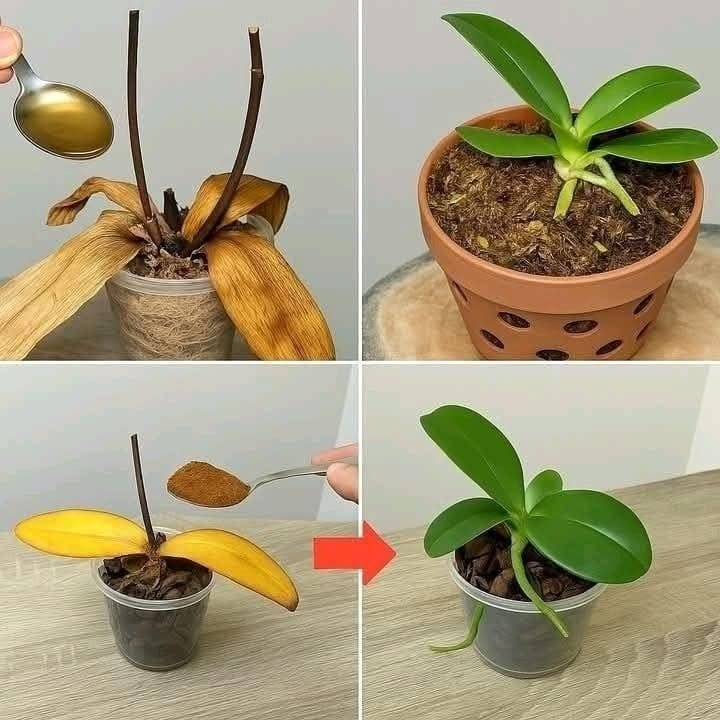
Orchids are among the most elegant and rewarding houseplants, but they can also be sensitive to mistakes in watering and care. One of the most common problems orchid owners face is root rot, a condition that can quickly weaken the plant and cause leaves to yellow.
Fortunately, a struggling orchid is not always a lost cause. With patience, proper cleaning, and the right growing conditions, many orchids can recover and develop healthy new roots.
Recognizing Root Rot
Before beginning any recovery process, it is important to confirm that root rot is actually the problem.
Common signs include:
- Yellowing leaves
- Soft or mushy roots
- Dark brown or black roots
- Poor growth
- Foul odor coming from the pot
- Drooping leaves despite watering
Healthy orchid roots should generally appear firm and green or silvery white.
Why Root Rot Happens
Root rot usually develops when roots remain wet for long periods.
Several factors can contribute:
- Overwatering
- Poor drainage
- Compacted growing medium
- Lack of airflow
- Excess fertilizer buildup
Once roots begin to decay, they can no longer absorb water and nutrients efficiently.
Step 1: Remove the Orchid From Its Pot
Carefully remove the orchid and gently shake away the old growing medium.
Inspect every root carefully.
Using sterilized scissors or pruning shears, remove all roots that are:
- Black
- Mushy
- Hollow
- Rotten
Leave only firm, healthy tissue.
Step 2: Clean the Remaining Roots
After trimming damaged roots, rinse the remaining healthy roots with clean water.
This helps remove debris and old growing material.
Some growers use a mild baking soda solution when cleaning orchids:
- 1 teaspoon baking soda
- 2 liters of water
Soak the roots briefly, then allow them to air dry before repotting.
Step 3: Repot in Fresh Growing Medium
A recovering orchid benefits from a clean, well-aerated growing medium.
Many growers use:
- Sphagnum moss
- Orchid bark
- Specialized orchid mixes
Position the orchid carefully and avoid packing the medium too tightly.
Air circulation around the roots remains essential.
Step 4: Create Ideal Recovery Conditions
The orchid now needs a stable environment to rebuild its root system.
- Bright indirect light
- Good air circulation
- Moderate humidity
- Stable temperatures
Avoid direct sunlight, which can stress a weakened plant.
see continuation on next page