Q: Can I use Russet potatoes instead of Yukon Gold?
A: You can, but Russets have a higher starch content and are more likely to break down and become mushy during a long slow-cook. Yukon Gold or red potatoes hold their shape much better while still getting creamy.
A: You can, but Russets have a higher starch content and are more likely to break down and become mushy during a long slow-cook. Yukon Gold or red potatoes hold their shape much better while still getting creamy.
Q: Why did my sauce curdle?
A: Dairy can curdle in a slow cooker if it boils too rapidly or if there isn’t enough starch to stabilize it. Always whisk flour or cornstarch into cold cream before adding it, and avoid cooking on HIGH for extended periods.
A: Dairy can curdle in a slow cooker if it boils too rapidly or if there isn’t enough starch to stabilize it. Always whisk flour or cornstarch into cold cream before adding it, and avoid cooking on HIGH for extended periods.
Q: Can I cook this on HIGH to save time?
A: Yes, you can cook it on HIGH for 3–4 hours. However, the LOW and slow method is highly recommended because it allows the onions to properly caramelize and the flavors to meld beautifully.
A: Yes, you can cook it on HIGH for 3–4 hours. However, the LOW and slow method is highly recommended because it allows the onions to properly caramelize and the flavors to meld beautifully.
Q: Do I need to peel the potatoes?
A: It’s entirely up to you! Leaving the skins on adds a rustic texture, extra fiber, and saves prep time. Just scrub them very well.
A: It’s entirely up to you! Leaving the skins on adds a rustic texture, extra fiber, and saves prep time. Just scrub them very well.
Q: Can I add the cheese at the very beginning?
A: It’s best to add cheese in the last 30 minutes of cooking. If added at the beginning, the cheese can separate, become oily, or stick to the sides of the slow cooker.
A: It’s best to add cheese in the last 30 minutes of cooking. If added at the beginning, the cheese can separate, become oily, or stick to the sides of the slow cooker.
 Quick-Reference Action Plan
Before You Cook
- Gather a sharp knife or mandoline for even slicing.
- Grease the slow cooker insert to prevent sticking.
- Whisk the flour thoroughly into the cold cream to prevent lumps.
During Cooking
- Resist the urge to lift the lid! Let the slow cooker work its magic.
- Check for doneness at the 6-hour mark (LOW) by piercing a potato with a fork.
Serving & Leftovers
- Add cheese in the last 30 minutes for a perfect melt.
- Garnish with fresh chives or parsley for a pop of color.
- Store leftovers promptly in the fridge for easy, comforting meals later in the week.
 A Compassionate Mindset: The Comfort of Slow Food
In a world that constantly demands speed and instant results, there is something deeply grounding about a meal that takes its time.
This Slow Cooker Potato and Onion Bake isn’t just a side dish; it’s an act of care. It’s the aroma that fills your home while you go about your day. It’s the dish you bring to a friend in need, knowing it will provide warmth and nourishment without requiring anything in return.
You don’t need to be a master chef to make this. You just need a few simple ingredients, a little patience, and the willingness to let time do the work.
Affirmation: “I give myself permission to slow down. Nourishment doesn’t have to be complicated to be deeply comforting.”
 Final Thought: Simple Ingredients, Profound Comfort
There is a quiet joy in recipes that transform humble, everyday ingredients into something extraordinary.
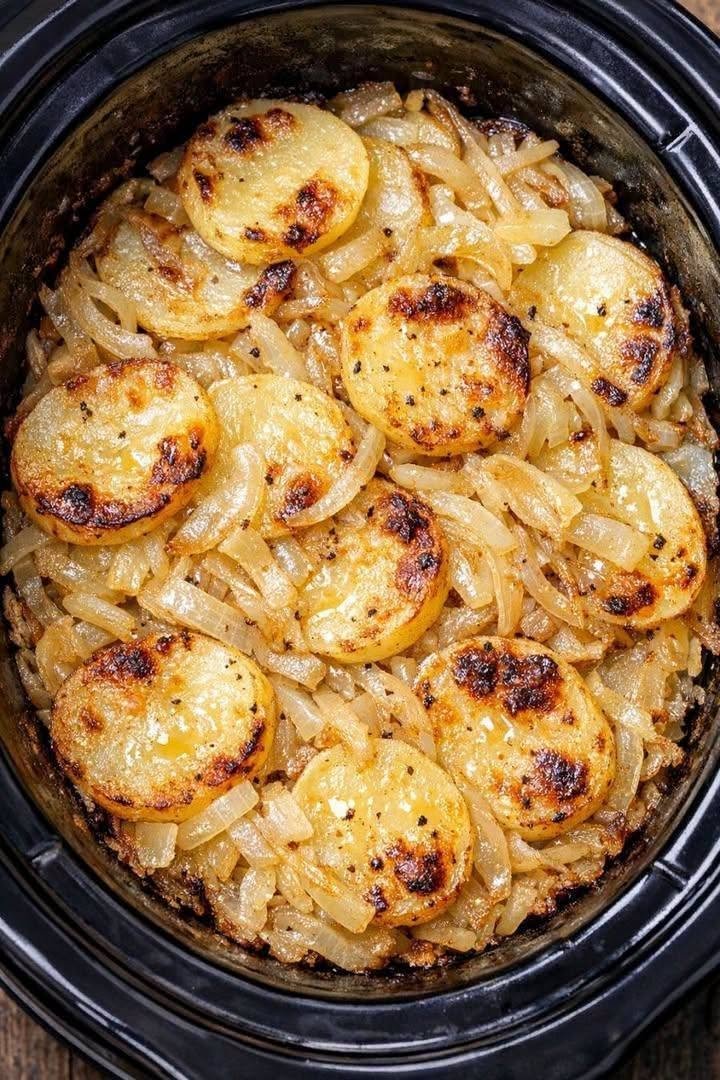
Thin slices of potato and onion, a little butter, and some time are all it takes to create a dish that feels like a hug on a plate. Whether it’s a holiday centerpiece or a humble Tuesday night dinner, this bake proves that the best meals are often the simplest ones.
So plug in your slow cooker, layer up the ingredients, and let the wonderful smell of caramelized onions and creamy potatoes do the rest.
“The best recipes aren’t about perfection. They’re about the warmth, memory, and love they bring to the table.”
Have you made a slow cooker potato bake before? Do you prefer it cheesy, or classic and simple? Share your favorite way to serve it below—we’re all cooking comfort, together.