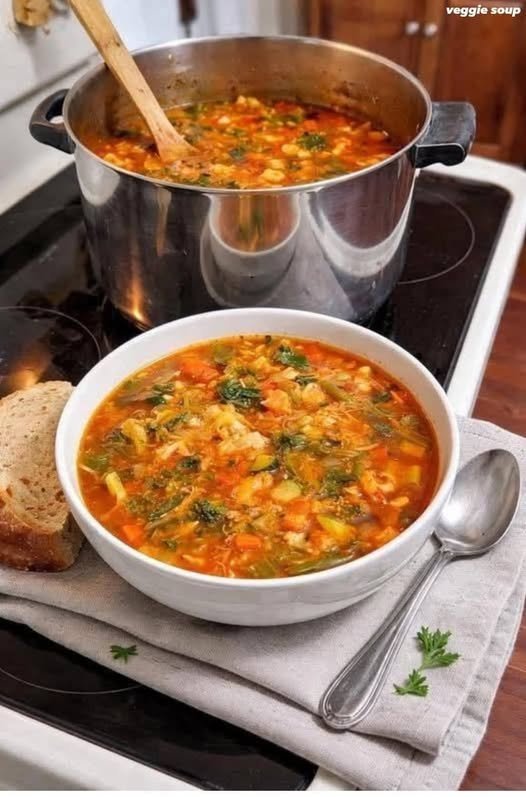
Slow Simmer: Reduce your heat to medium-low and let the soup bubble gently for thirty minutes. This extended cooking time allows the potato to break down slightly, naturally thickening the broth, while all the flavors meld together beautifully. The chickpeas will absorb the surrounding flavors while maintaining their pleasant, slightly firm texture.
Preparing the Bread: While your soup simmers, prepare the accompanying ciabatta. Arrange bread slices on a baking sheet in a single layer. Brush each slice generously with olive oil. Place under your oven’s broiler and watch carefully as the bread toasts to golden perfection, usually just two to three minutes.
Final Touches: Once your soup has finished its simmer, stir in the diced tomato and chopped fresh parsley. Increase the heat slightly and bring everything to a rolling boil for just a minute or two. This brief high heat brightens the tomato flavor without overcooking it into mushiness.
Plating and Serving: Ladle the steaming soup into warmed bowls. Drizzle each serving with additional olive oil, which adds richness and a beautiful sheen to the surface. Place a golden ciabatta slice alongside or directly in the bowl for soaking up the flavorful broth.
Expert Techniques for Superior Results
Uniform Cutting: Take care to cut all vegetables into similar-sized pieces. This ensures everything cooks through at the same pace, preventing some pieces from turning mushy while others remain crunchy.
Canned Chickpea Convenience: Using canned chickpeas instead of cooking dried ones from scratch saves considerable time without sacrificing quality. Rinse them thoroughly before adding to remove excess sodium and improve their texture in the finished soup.
Flexible Squash Substitutions: When pumpkin isn’t available or you want variety, butternut squash, acorn squash, or even sweet potato make excellent alternatives. Each brings slightly different sweetness and texture, so experiment to find your favorite.
Enhanced Broth Depth: While water works perfectly fine, using vegetable broth instead dramatically intensifies the overall flavor profile. This simple swap transforms good soup into exceptional soup.
Chickpea Texture Control: Resist the temptation to overcook the chickpeas once they’re added to the soup. They should remain intact with a pleasant, creamy bite rather than disintegrating into mush.
Consistency Adjustment: Soup thickens as it sits, especially if it contains starchy vegetables like potatoes. Keep a container of warm water or broth nearby when reheating, adding small amounts until you achieve your preferred consistency.
Thoughtful Serving Suggestions
The beauty of this chickpea vegetable soup lies in its versatility and the various ways you can present it:
A final drizzle of your finest extra virgin olive oil right before serving elevates every bowl, adding fruity notes and luxurious mouthfeel that brings all the flavors together.
Fresh, crusty ciabatta or hearty sourdough bread serves as the perfect vehicle for soaking up every drop of that delicious broth. The contrast between crunchy bread and silky soup creates textural harmony.
For dramatic presentation that guests will remember, hollow out small round bread loaves and ladle the soup directly inside. This rustic bread bowl approach looks impressive while keeping everything warm longer and providing edible dishes that eliminate cleanup.
When you want a more substantial meal, pair the soup with a classic grilled cheese sandwich made with sharp cheddar or your favorite plant-based cheese. The combination of melty, crispy sandwich and warming soup creates the ultimate comfort food experience.
Balance the soup’s richness with a bright, crisp green salad dressed simply with lemon vinaigrette. The acidity and freshness provide a perfect counterpoint to the earthy, filling soup.
Starting from Dried Chickpeas
For those who prefer cooking dried chickpeas from scratch, the process requires planning ahead but rewards you with superior texture and flavor. Place dried chickpeas in a large bowl and cover them completely with cold water, ensuring at least three inches of water above the beans since they’ll expand significantly. Let them soak overnight, or for at least eight hours.
The following day, drain and rinse your plumped chickpeas thoroughly. Transfer them to a Dutch oven or large stockpot and add fresh water, covering the chickpeas by several inches. For enhanced flavor, toss in a bay leaf or small pinch of salt. Bring the pot to a vigorous boil over high heat, then immediately reduce to a gentle simmer.
Cook the chickpeas until tender but not falling apart, which typically takes about two hours depending on their age and variety. Test for doneness by pressing a chickpea between your fingers; it should yield easily without being mushy. Drain well before incorporating them into your soup.
Proper Storage and Freezing Guidelines
One of this soup’s greatest virtues is how beautifully it keeps and often tastes even better after a day or two when all the flavors have had time to fully integrate and develop.
Refrigeration: Transfer cooled soup to airtight containers and store in your refrigerator where it will maintain optimal quality for up to four days. Make sure containers are truly airtight to prevent the soup from absorbing other refrigerator odors.
Freezing for Future Meals: This soup freezes exceptionally well, making it ideal for batch cooking. Portion the soup into individual or family-sized servings and transfer to freezer-safe containers, leaving about an inch of headspace for expansion. Properly stored, frozen soup maintains excellent quality for up to three months.
Thawing and Reheating: Move frozen soup to the refrigerator the night before you plan to serve it, allowing it to thaw slowly and safely overnight. When ready to eat, warm it gently on the stovetop over medium heat, stirring occasionally. If the soup has thickened during storage, simply add small splashes of water or vegetable broth until it reaches your desired consistency.
Nutritional Benefits and Health Considerations
This soup delivers impressive nutritional value alongside its comforting flavor profile. Chickpeas stand out as an excellent source of plant-based protein, providing the building blocks your body needs without any animal products. They’re also loaded with dietary fiber, which supports healthy digestion, helps regulate blood sugar levels, and keeps you feeling satisfied for hours after eating.
The pumpkin and carrots contribute substantial amounts of vitamin A in the form of beta-carotene, which supports eye health, immune function, and skin vitality. These orange vegetables also provide powerful antioxidants that help protect your cells from damage.
Extra virgin olive oil contributes heart-healthy monounsaturated fats that help reduce inflammation and support cardiovascular health. These healthy fats also aid in the absorption of fat-soluble vitamins from the vegetables.
This represents comfort food that genuinely nourishes your body rather than just providing empty calories and fleeting satisfaction.
Reheating Techniques for Best Results
Proper reheating preserves the soup’s texture and flavor rather than turning it into an overcooked, mushy mess.
Stovetop Method: Pour your soup into a medium saucepan and place over medium heat. Warm it slowly and gently, stirring occasionally to ensure even heating and prevent any scorching on the bottom. The soup is ready when it’s steaming hot throughout, which usually takes eight to ten minutes depending on quantity. Avoid bringing it to a full boil, as aggressive heat can break down the vegetables further than desired.
Microwave Approach: Transfer individual portions to microwave-safe bowls. Heat on high power in one-minute intervals, stirring thoroughly between each burst to distribute heat evenly. Continue until the soup reaches your preferred serving temperature. This method works well for quick lunches but provides less control than stovetop reheating.
Recipe Variations and Customization Ideas
Spice It Up: Transform this mild soup into something with more kick by adding red pepper flakes, a pinch of cayenne, or diced fresh jalapeño peppers during the initial vegetable sauté.
Grain Addition: Boost the heartiness by stirring in cooked quinoa, farro, or small pasta shapes during the last ten minutes of cooking.
Leafy Greens: Incorporate chopped kale, spinach, or Swiss chard near the end of cooking for added nutrition and color.
Creamy Version: Use an immersion blender to puree half the soup, leaving the remainder chunky. This creates a thicker, creamier base while maintaining interesting texture.
Herb Variations: Experiment with different fresh herbs like basil, cilantro, or dill in place of or in addition to parsley for unique flavor profiles.
Lemon Brightness: Squeeze fresh lemon juice into each bowl just before serving to add a bright, acidic note that balances the earthy flavors.
Cooking Time and Difficulty Overview
This recipe falls solidly into the easy category, making it accessible even for beginning cooks. From start to finish, expect about thirty minutes of active preparation and cooking time, making it perfect for weeknight dinners when time is limited but you still want something homemade and nourishing.
The straightforward technique involves nothing more complicated than chopping vegetables and stirring a pot, with no special equipment or advanced skills required. It’s the kind of forgiving recipe where small variations or substitutions won’t ruin the final result, giving you confidence to make it your own.
Make-Ahead Strategy for Busy Schedules
This soup fits beautifully into meal prep routines. Prepare a large batch on Sunday afternoon and portion it out for easy weekday lunches or quick dinners. The flavors actually improve after a day or two in the refrigerator, making it an ideal make-ahead option.
Consider preparing all your vegetables in advance and storing them in the refrigerator, then you can quickly throw everything together on a busy evening without any chopping stress.
Final Thoughts on This Comforting Classic
This wholesome chickpea and vegetable soup represents everything we love about simple, honest cooking. It requires no exotic ingredients or complicated techniques, yet delivers profound satisfaction and genuine nourishment. The combination of protein-rich chickpeas, vitamin-packed vegetables, and aromatic olive oil creates a balanced meal that supports your health while comforting your soul.
Whether you’re feeding a family, meal prepping for the week ahead, or simply craving something warm and satisfying on a cold evening, this soup answers the call beautifully. Make a pot this week and discover why humble chickpea soup has remained a beloved comfort food across cultures and generations.