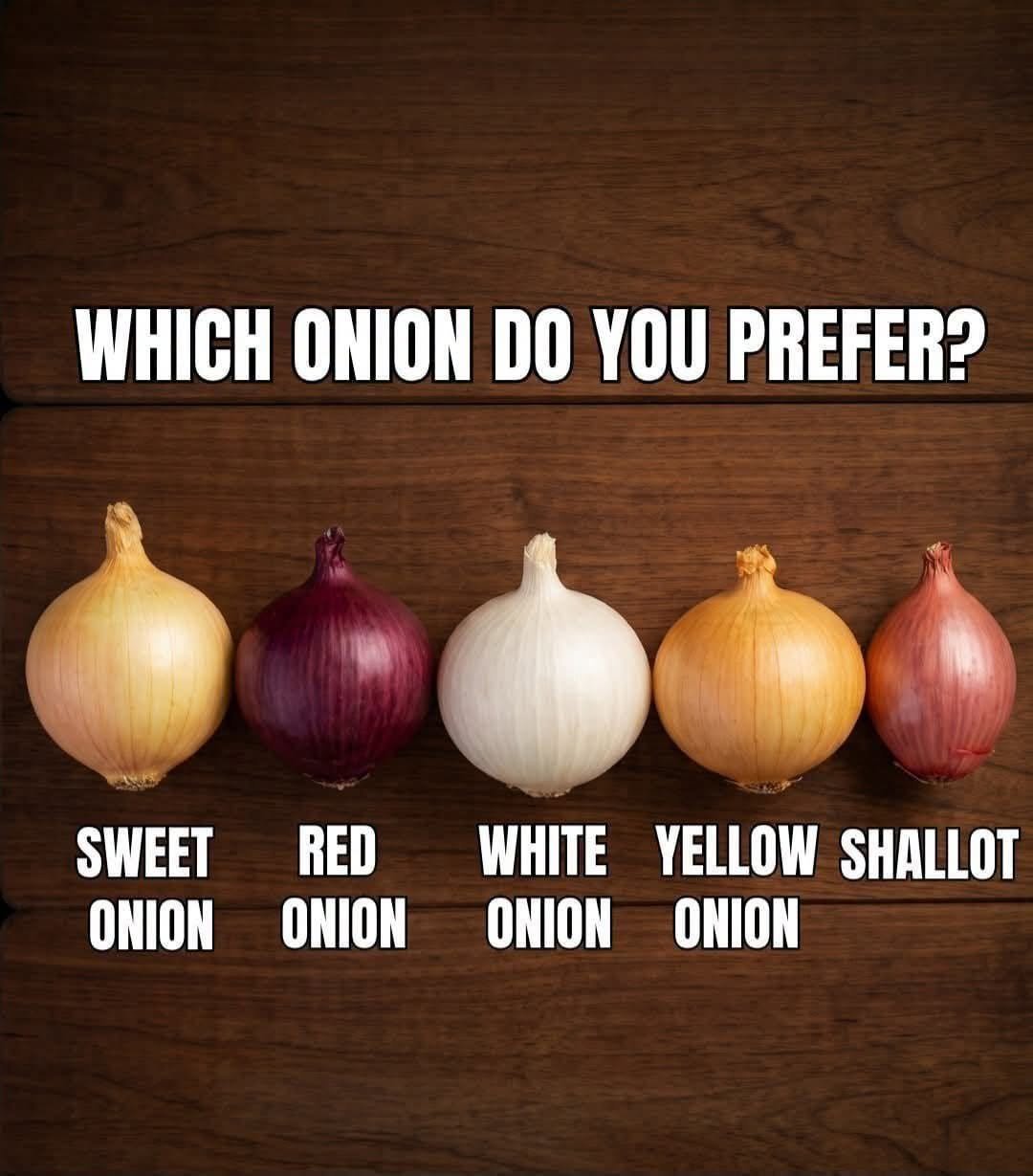
Sweet onion, red onion, white onion, yellow onion, or shallot? 

Onions are one of those ingredients that quietly appear in countless recipes. They go into soups, stews, sauces, stir-fries, casseroles, burgers, salads, tacos, omelets, roasted vegetables, and so many other dishes.
But here’s the fun part: not all onions taste the same.
Some are sweet and mild. Others are sharper and more pungent. Some are fantastic when caramelized, while others are especially good raw.
So if you had to choose just one onion to keep in your kitchen, which would you pick?
 1. Yellow Onion
The yellow onion is probably the classic all-purpose choice.
It has a stronger, savory flavor when raw, but cooking mellows it and brings out its natural sweetness. That’s why it’s such a useful onion for everyday cooking.
Great for:
Soups
Stews
Chili
Sauces
Gravies
Roasted dishes
Stir-fries
Burgers
Caramelized onions
If a recipe simply says “1 onion” without specifying a variety, yellow onion is often a dependable choice.
Best for: Everyday cooking 
2. Sweet Onion
Sweet onions are milder and naturally sweeter than many stronger-tasting onions.
They’re especially nice when you want onion flavor without as much sharpness. Their sweetness also makes them excellent for roasting, grilling, frying, and caramelizing.
Great for:
Burgers
Sandwiches
Grilled onions
Onion rings
Salads
Salsas
Caramelized onions
Roasted vegetables
Sweet onions are also delicious sliced thinly and eaten raw when you want a gentler onion flavor.
Best for: Mild, sweet onion flavor 
3. Red Onion
Red onions are hard to miss because of their beautiful purple-red color.
They’re particularly popular in dishes where the onion is served raw or only lightly cooked.
Great for:
Salads
Tacos
Sandwiches
Burgers
Salsas
Guacamole
Pickled onions
Mediterranean-style dishes
Thinly sliced red onion can add both color and a crisp, sharp bite to a dish.
And when you pickle it, that gorgeous color can make an ordinary meal look instantly more interesting.
Best for: Raw dishes, salads, tacos, and pickling 
CONTINUED ON THE NEXT PAGE.
4. White Onion
White onions have a clean, sharp flavor and are commonly used in many savory dishes.
They’re especially useful when you want a noticeable onion flavor without the sweetness associated with sweet onions.
Great for:
Mexican-inspired dishes
Salsas
Tacos
Soups
Stir-fries
Rice dishes
Sauces
Fresh toppings
White onions can be excellent raw, particularly when finely chopped and added to salsa or sprinkled over tacos.
Best for: Fresh toppings and savory cooking
5. Shallot
And then there’s the shallot.
It’s smaller than most onions and has a more delicate, nuanced flavor. Shallots are especially popular in sauces, dressings, vinaigrettes, and dishes where you want onion flavor without overwhelming the other ingredients.
Great for:
Sauces
Vinaigrettes
Salad dressings
Roasted dishes
Pan sauces
Garnishes
Fine chopping
French-inspired cooking
Shallots can also become wonderfully sweet and tender w
hen roasted or slowly cooked.
Best for: Sauces, dressings, and more delicate dishes 
Which Onion Is the Most Versatile?
If you’re trying to decide which onion deserves a permanent place in your kitchen, yellow onion is a very strong all-purpose choice.
But that doesn’t mean it’s the “best” onion.
It depends entirely on what you’re cooking.
Onion Flavor Great For
Yellow Savory, moderately pungent Soups, stews, sauces, everyday cooking
Sweet Mild and sweet Burgers, grilling, roasting, salads
Red Crisp, sharp, slightly sweet Salads, tacos, salsa, pickling
White Clean and pungent Salsas, tacos, savory dishes
Shallot Mild, delicate, complex Sauces, dressings, roasting
The differences aren’t absolute—onion varieties can vary in flavor—but this is a useful kitchen guide.
 What Happens When You Cook an Onion?
Cooking changes an onion dram
atically.
A raw onion can be sharp, crunchy, and pungent. As it cooks, its texture softens and its flavor becomes sweeter and more mellow.
Cook it slowly enough and you can develop deeply browned, sweet caramelized onions.
That’s one reason onions are such a powerful cooking ingredient: the same vegetable can taste completely different depending on how you prepare it.
see continuation on next page