The Alchemy of Flavor: A Definitive Exploration of the World’s Best Steak Marinade
The quest for the perfect steak is a pilgrimage undertaken by home cooks and master chefs alike. It is a journey that leads through pastures and butcher shops, across the searing surfaces of grills and cast-iron pans, and ultimately, to the primal, joyous moment of the first bite. While the quality of the meat and the precision of the cook are paramount, there exists a powerful intermediary process—a biochemical ballet that can elevate good steak to greatness: the marinade.
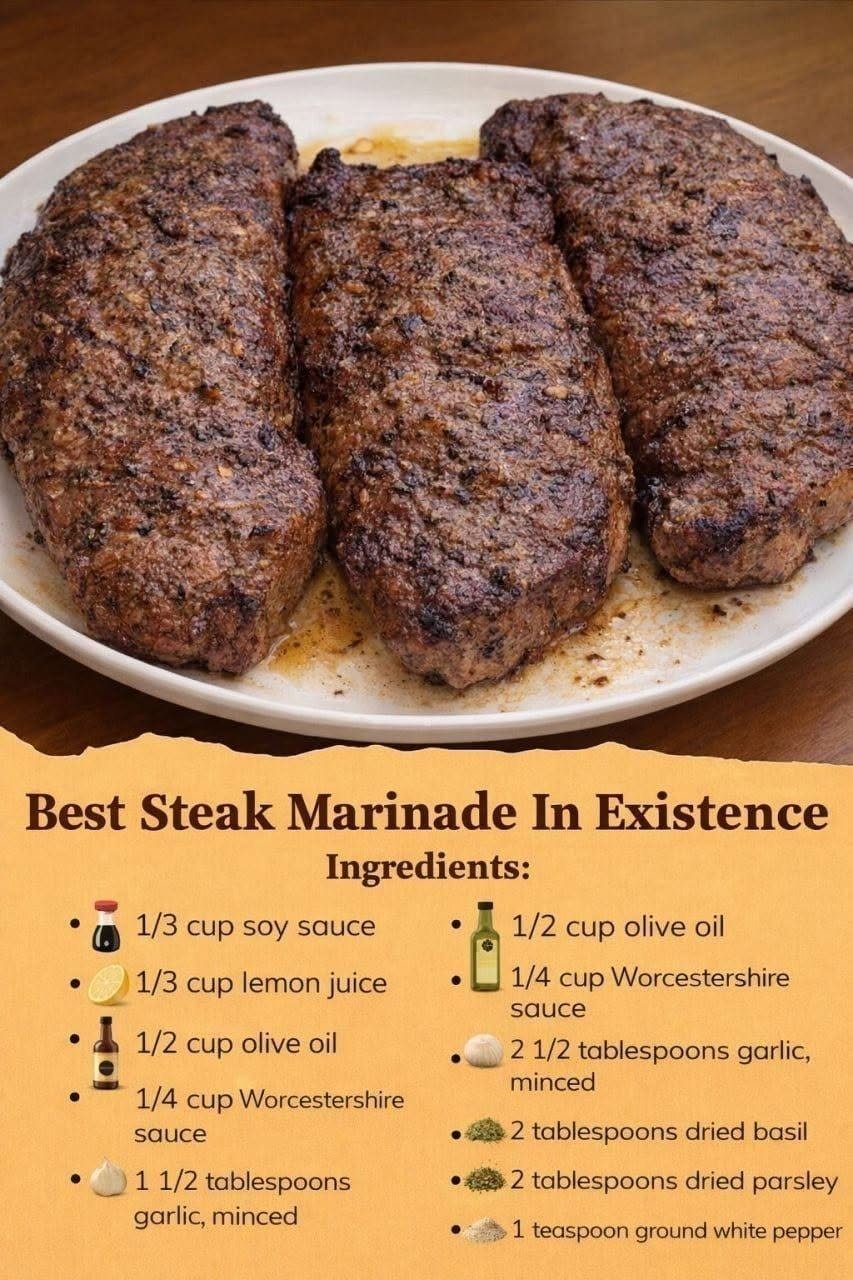
The recipe presented here is not merely a list of ingredients; it is a blueprint for flavor architecture. Dubbed hyperbolically but not unjustly as “The Best Steak Marinade in Existence,” its power lies in its harmonious balance of five fundamental pillars of taste: umami, acidity, fat, aroma, and heat. This document will not only guide you through its preparation but will immerse you in the why behind each component, the science of its function, and the culinary philosophy that makes it transformative.
Part I: The Philosophy & Science of Marination
Before we measure a single cup, we must understand what we are doing. A marinade typically has three objectives:
Flavor Enhancement: This is its primary role. The surface of the steak is imbued with the flavors of the marinade, creating a complex crust and a seasoned outer layer.
Tenderization: Acidic components (like lemon juice) and enzymatic components (found in things like fresh pineapple or ginger, though not here) can begin to break down tough muscle proteins and connective tissue on the very surface of the meat.
Moisture Retention: The oil in the marinade helps coat the meat, and the savory liquids can promote some water retention, though the effect is often subtle.
A Critical Note on Tenderness: A common misconception is that marinades penetrate deep into the meat. In reality, even over 8 hours, the movement of molecules beyond a few millimeters is limited. What this means is that marination is most effective for flavoring rather than fundamentally tenderizing a very tough cut. For tough cuts, mechanical tenderization (scoring, pounding) or slow, low-temperature cooking is more effective. This marinade shines on already-tender cuts like strip steak, ribeye, sirloin, or flank, where its flavor-building is the star.
Part II: Deconstructing the Pantheon of Ingredients – A Molecular & Historical Journey
Our marinade is an orchestra. Each instrument must be understood to appreciate the symphony.
The Umami Foundation (The Bassline):
1/3 Cup Soy Sauce: This is the deep, savory bedrock. Soy sauce is a product of fermented soybeans and wheat, rich in glutamates—the very compounds that define the umami taste. It provides a salty, complex depth that permeates the meat. For a deeper, less wheat-forward note, consider tamari. For a richer, slightly sweet variant, seek out aged shoyu.
1/4 Cup Worcestershire Sauce: A fermented condiment from England with a startlingly global ingredient list (anchovies, tamarind, molasses, vinegar). It adds a multifaceted umami that is both savory and faintly fruity-tart, complementing the soy sauce with a different, more complex fermentation profile.
The Acidic Brightness (The Melody):
1/3 Cup Fresh Lemon Juice: This is the crucial high note. The citric acid performs a gentle surface tenderization, but more importantly, it brightens the entire marinade, cutting through the richness of the oil and the deep umami. Its volatile aromatic compounds lift the aroma. Freshness is non-negotiable. Bottled lemon juice carries stale, off-flavors that will muddle the final result.
The Fatty Vehicle (The Harmony & Conductor):
How-To, DIY & Expert Content
Baked Goods
1/2 Cup Olive Oil: This is more than just liquid; it is the medium that carries fat-soluble flavor compounds from the herbs and garlic into the meat. It coats each fiber, ensuring herbs adhere and promoting even browning during cooking. A robust extra-virgin olive oil will impart a distinct, peppery fruitiness, while a milder pure olive oil will act as a more neutral conductor. Choose based on how prominent you want the olive oil note to be.
The Aromatic Chorus (The Texture):
1 1/2 Tablespoons Garlic Powder & 1 Teaspoon Dried Minced Garlic: Why two forms? Garlic powder dissolves almost completely, distributing a consistent, pervasive garlic essence throughout the liquid. Dried minced garlic rehydrates in the marinade, offering tiny, potent bursts of more textured garlic flavor. This dual approach ensures garlic in every dimension.
3 Tablespoons Dried Basil & 1 1/2 Tablespoons Dried Parsley: Here, dried herbs are superior to fresh for a marinade of this duration. Their flavors are more concentrated and stable, slowly leaching out into the oil and acid over hours without degrading or turning slimy, as fresh herbs might. Basil provides a sweet, anise-like warmth, while parsley offers a clean, slightly grassy background note that balances the others.
The Piquant Rhythm (The Percussion):
1 Teaspoon Ground White Pepper: White pepper is made from ripened peppercorns with the outer skin removed. It offers a sharper, more direct heat and a distinct earthy, fermented aroma than black pepper. It integrates seamlessly into the liquid without visually speckling the meat, providing a steady, warming heat throughout.Visual Art & Design
1/4 Teaspoon Hot Pepper Sauce (e.g., Frank’s RedHot, Tabasco): This is the subtle kick, the hint of vinegary heat that lingers in the background. It’s not about making the steak “spicy,” but about adding a layer of complexity that wakes up the other flavors. It’s the whispered secret in the marinade.
Part III: The Ritual of Creation – A Step-by-Step Master Guide
The method is simple, but intention matters.
Step 1: The Mise en Place (Everything in Its Place)
Assemble all ingredients and tools. You will need a precise measuring set (liquid and dry), a powerful blender, a non-reactive glass or ceramic dish or a heavy-duty resealable plastic bag for marinating, and a whisk.
Step 2: The Synergistic Blending
Contrary to simply stirring, using a blender is a act of emulsification and aeration. By combining the soy sauce, olive oil, lemon juice, and Worcestershire sauce in the blender pitcher first and pulsing briefly, you create a preliminary emulsion—a temporary suspension of oil in the acidic water-based liquids. This ensures every molecule of oil is coated in flavor and will distribute uniformly.
Then, add the garlic powder, dried basil, dried parsley, and white pepper. The high-speed blending (a full 30 seconds is ideal) does several things: it fully emulsifies the marinade into a slightly thickened, homogeneous liquid; it aerates it slightly, allowing the aromatic compounds to bloom; and it ensures every granule of dried herb and spice is perfectly integrated, preventing clumping.
Step 3: The Final Adjustments
Taste the blended marinade on a spoon. This is your canvas. Consider: Does it need a brighter acid note? A hint more lemon. More depth? A dash more Worcestershire. More earthy heat? A pinch more white pepper. This is when you add the optional 1 teaspoon dried minced garlic for that textural punch and the 1/4 teaspoon hot pepper sauce for the vinegary heat. Blend again for 5-10 seconds to incorporate.
See next page…