Part IV: The Sacred Union – Marinating the Steak
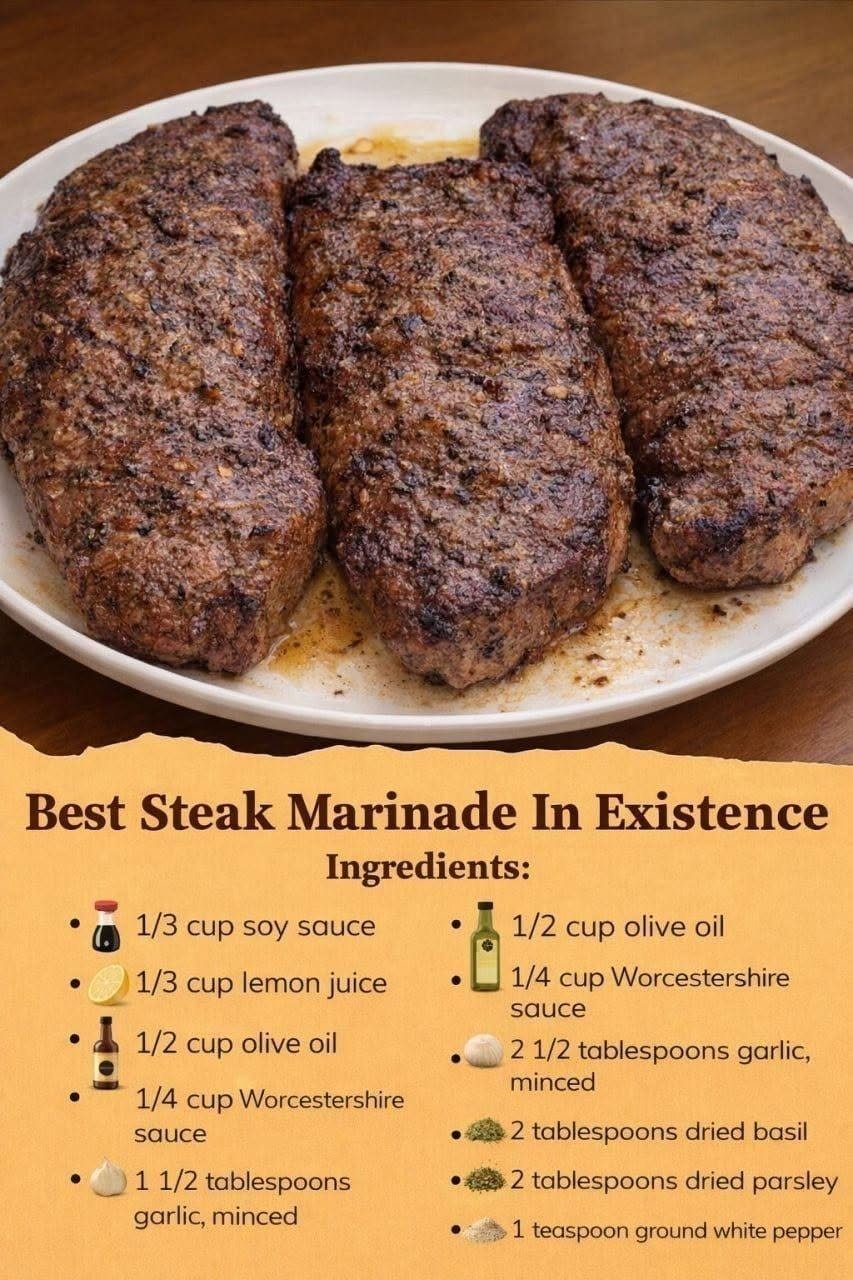
Meat Selection: This marinade is versatile. It excels with:
Flank or Skirt Steak: Their loose, fibrous grain soaks up flavor beautifully. Marinate for 4-8 hours, then slice thinly against the grain.
Hanger or Flat Iron Steak: These “butcher’s cuts” have bold flavor that stands up to the marinade’s intensity.
Ribeye, New York Strip, or Sirloin: For these premium cuts, treat the marinade as a powerful seasoning rub. 2-4 hours is sufficient to add flavor without compromising the steak’s own sublime beefiness.
The Vessel & The Process:
Place your steaks in a single layer in a glass or ceramic dish, or in a heavy-duty resealable plastic bag.
Pour the marinade over the meat, ensuring every surface is coated. If using a dish, turn the steaks several times to coat. If using a bag, press out excess air and seal tightly.
Refrigerate immediately. This is a food safety imperative. Never marinate at room temperature.Food
The Time Alchemy: For most cuts, 4 to 8 hours is the golden window. Less than 2 hours, and the flavors are merely acquaintances. Beyond 8-12 hours, the acidic components can begin to break down the meat’s surface too much, giving it an almost ceviche-like texture that can be mushy after cooking. For very thick or tough cuts, you may push to 12 hours, but monitor closely.
Part V: The Culmination – Cooking & Serving Philosophy
1. The Great Drain & Dry:
Remove the steak from the marinade and let the excess liquid drip off. This is critical: Use paper towels to pat the steak completely dry. A wet steak will steam instead of sear, preventing the formation of the beautiful, flavorful crust (the Maillard reaction) you desire. Discard the used marinade; do not reuse it as it contains raw meat juices.
2. The Temper:
Let the dried steak sit at room temperature for 30-45 minutes before cooking. This allows for more even cooking from edge to center.
3. The Cook:
Whether you choose the primal roar of a charcoal grill, the consistent heat of gas, or the superb sear of a cast-iron skillet, ensure your cooking surface is brutally hot. Season the steak simply with a light sprinkle of coarse kosher salt just before it hits the heat (the marinade is already salty). Sear undisturbed to form a crust, then cook to your desired doneness. For medium-rare, aim for an internal temperature of 130-135°F (54-57°C), remembering carryover cooking will add 5 degrees.
4. The Sacrosanct Rest:
Once cooked, the steak must rest on a warm plate or cutting board, tented loosely with foil, for a minimum of 5-10 minutes (longer for thicker cuts). This allows the frenzied, contracted juices to redistribute throughout the meat. Cutting immediately results in a flood of precious flavor on the board, not in your steak.
5. The Presentation & Accompaniment:
Slice your steak against the grain to ensure tenderness. The marinade will have created a stunning, savory, slightly caramelized crust that gives way to the juicy, beefy interior. Suggested pairings should complement without competing: a simple arugula salad with shaved Parmesan and lemon vinaigrette; roasted root vegetables with rosemary; or a creamy, neutral potato puree.
Part VI: Variations & The Chef’s Canvas
The provided recipe is the masterpiece, but art invites interpretation.
The Sweet Balance: Add 1-2 tablespoons of honey, maple syrup, or brown sugar to caramelize beautifully on the grill.
The Herbaceous Twist: Replace dried basil with dried oregano or thyme for a more Provençal profile.
The Allium Boost: Add 1 tablespoon of onion powder or a teaspoon of smoked paprika for depth.
The Asian Inflection: Replace Worcestershire with oyster sauce, add a tablespoon of grated fresh ginger, and use toasted sesame oil in place of half the olive oil.
Conclusion: Beyond the Recipe
“The Best Steak Marinade in Existence” is, in truth, a masterclass in balance. It teaches us that flavor is built in layers—the profound depth of fermentation, the sharp clarity of acid, the unctuous carry of fat, the fragrant whisper of herbs, and the subtle spark of heat. To prepare it is to engage in an ancient culinary practice, using modern understanding to manipulate molecules for one singular purpose: to heighten pleasure, to transform a simple piece of meat into a memorable experience. It is a testament to the fact that sometimes, the magic is not just in the fire that cooks, but in the patient, flavorful bath that prepares the meat for its destiny.