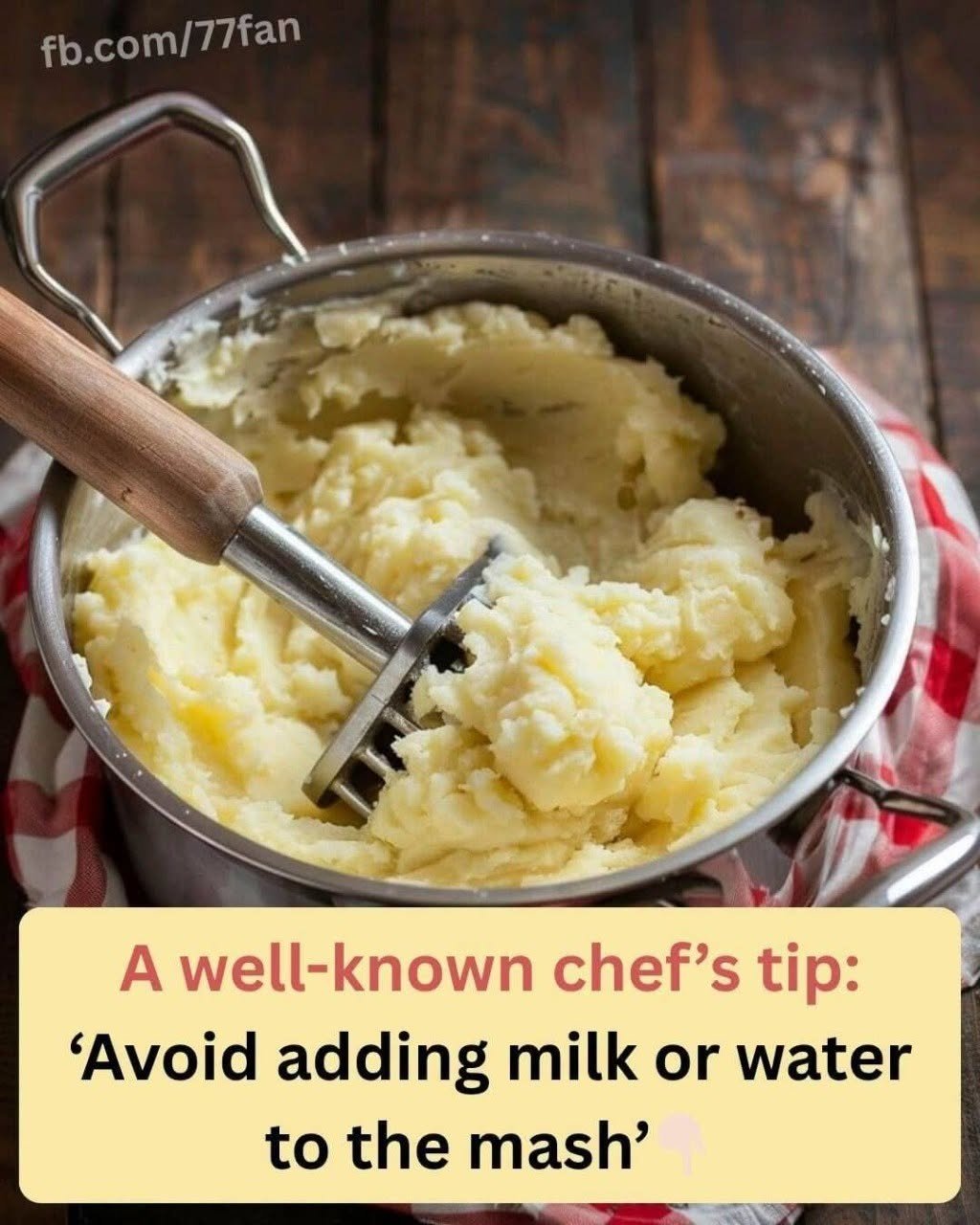
How to make them
Cut the potatoes into even chunks — I aim for about an inch and a half, inch and three-quarters — and put them in a pot of cold salted water. Starting in cold water matters; it helps the potatoes cook evenly from the outside in instead of the outside getting done while the center is still hard. Bring it to a boil, reduce to a simmer, and cook until you can slide a fork through a chunk without any resistance at all. Fifteen minutes, maybe twenty. It depends on how big your pieces are.
Drain them and put them back in the hot pot. This is a step I skipped for years and shouldn’t have — letting them sit in the dry hot pot for a minute or two lets the steam escape, and drier potatoes absorb the cream and butter better. You want them thirsty.
While the potatoes are draining, warm the cream and butter together in a small saucepan over low heat. Add the garlic cloves if you’re using them. You’re not boiling anything, just warming — you want it hot enough that there’s no chill left. Adding cold dairy to hot potatoes makes the texture seize up and go grainy, and you don’t want that after all this work.
Mash the potatoes. A ricer gives you the smoothest result and I do own one and do use it when I’m feeling patient, which is probably half the time. A regular masher gives you a slightly more textured result that is also completely good and real and fine. What you don’t want is a mixer or a food processor — those overwork the starch and turn the potatoes gluey. Do it by hand.
Pour the warm cream mixture in gradually — not all at once — stirring as you go. You may not need all of it, or you may want a touch more. Go by feel. Season with salt and pepper and taste as you go.
That’s it. That’s genuinely the whole thing.
Variations
Crème fraîche stirred in at the end — a couple tablespoons — adds a slight tang that I find very nice when serving alongside something rich like short ribs or beef bourguignon. It’s not traditional but it works.
Roasted garlic instead of raw changes the character entirely. Raw garlic in the cream is sharp and clean; roasted garlic is sweet and mellow and almost caramel-like. Worth doing if you have the time. I usually don’t, but when I do the potatoes go in a completely different direction — more complex, more savory in a way that’s hard to describe.
Grated Gruyère stirred in at the end is not subtle and is not trying to be. It makes the potatoes very rich, almost like a gratin in mashed form. A small portion goes a long way. This is a version worth making when you want to do something slightly different — just be prepared for it to become the version everyone requests.
Leftovers and reheating
These reheat better than standard mashed potatoes. Cover and refrigerate for up to two days. When you’re ready to reheat, put them in a pot with a small splash of cream over medium-low heat and stir steadily until they warm through. Don’t rush it with high heat or they’ll scorch on the bottom before the middle is warm.
The butter tends to separate a little after refrigerating, which looks alarming when you open the container but resolves itself with the stirring. You may want to add a small pat of fresh butter at the end just to finish them.