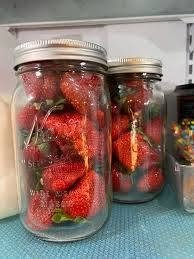
Don’t completely seal wet strawberries in a container with trapped moisture.
If your container has ventilation, use it. You can also line the bottom with a clean paper towel to help absorb excess moisture.
The goal isn’t to dry the strawberries out completely—it’s to avoid letting them sit in a pool of moisture.
Keep them refrigerated
Store strawberries in the refrigerator rather than leaving them on the kitchen counter for extended periods.
Keep them away from areas where they can get crushed under heavier foods.
A little pressure can damage the berries and create soft spots.
Wash them properly when you’re ready to eat
When you’re ready to eat your strawberries, rinse the amount you need under cool running water.
Then gently dry them.
Avoid leaving washed strawberries sitting wet in a container.
Don’t ignore the stems
Keep the green tops attached while storing the strawberries.
Removing them creates an exposed area where moisture can enter more easily.
It’s generally better to remove the stems right before eating or preparing them.
The biggest mistake?
Buying fresh strawberries and treating them like they’re indestructible.
They’re not.
Keep them dry, cold, gently handled, and regularly inspected.
And if you notice mold on a strawberry, don’t simply wash the mold off and eat that berry. Mold can spread beyond what you can see, so it’s safer to discard visibly moldy or spoiled fruit.
A few small storage habits can mean fewer wasted strawberries—and a much better chance of still having fresh fruit several days after you bring it home.