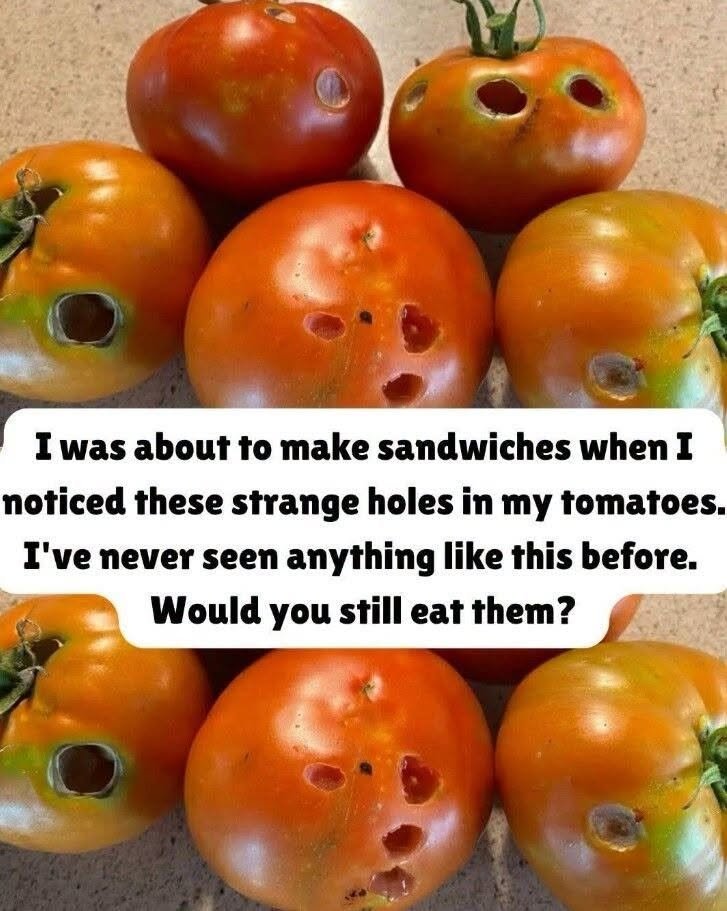
There is nothing quite like walking into the garden and finding a tomato that looked perfect yesterday suddenly marked by a strange hole. You may see a small opening near the stem, a larger cavity on the side, or an irregular bite that seems to have appeared overnight. Naturally, the first question is: What is eating my tomatoes?
The good news is that a few damaged tomatoes do not necessarily mean your entire garden is in trouble. Holes in tomato fruit are relatively common, and several different pests—or even wildlife—can be responsible. The key is to look closely at the type of damage, where the hole appears, and what other clues are present on the plant.
The original article identifies several common possibilities, including tomato fruitworms, hornworms, slugs and snails, and birds or other small animals. Extension resources also list corn earworms (tomato fruitworms), hornworms, slugs, picnic beetles, and cutworms among potential causes of holes in tomato fruit.
First, Don’t Panic About a Few Holes
Finding damaged fruit can be frustrating, especially after spending weeks watering, pruning, feeding, and protecting your plants. But a hole in one or two tomatoes does not automatically mean the plant is doomed.
Instead of immediately reaching for a pesticide, take a few minutes to investigate. Identifying the culprit first is important because different pests behave differently and require different approaches.
A useful starting point is to examine:
The size and shape of the hole
Whether the hole is near the stem or elsewhere on the fruit
Whether the damage is shallow or extends deep into the tomato
Whether there are droppings or frass nearby
Whether leaves are also being eaten
Whether you notice slime trails
Whether the fruit is already overripe or damaged
Whether birds or other animals have access to the garden
These clues can turn a mysterious hole into a much easier pest-identification puzzle.
Tomato Fruitworms Can Bore Directly Into the Fruit
One of the most important suspects is the tomato fruitworm, also known as the corn earworm. These are caterpillars that can feed directly on tomato fruit.
The damage may appear as a relatively distinct hole, often toward the upper portion of the tomato. Once the caterpillar enters the fruit, it can continue feeding inside, making the damage considerably worse than what is visible from the outside.
University of Minnesota Extension lists corn earworm, also called tomato fruitworm, as a pest capable of chewing holes into tomato fruit.
One reason these pests can be particularly frustrating is that you may not see the caterpillar immediately. The visible opening can be much easier to spot than the insect responsible for creating it.
If you find a suspicious hole, inspect the surrounding fruit and nearby plants carefully rather than assuming the problem has disappeared.
Hornworms Can Cause Bigger Damage
Tomato hornworms are another familiar garden pest. These large green caterpillars are capable of consuming impressive amounts of foliage, and they can also damage tomato fruit.
Hornworm damage can be especially noticeable because the insects themselves can become surprisingly large. They often blend into green foliage, however, which means a gardener can overlook them despite the amount of damage they are causing.
Look for:
Large areas of missing leaves
Chewed fruit
Dark droppings, known as frass
Large green caterpillars hiding among stems and leaves
University of Minnesota Extension notes that hornworms can chew holes in tomato fruit and may also severely defoliate plants. UC Integrated Pest Management likewise notes that high hornworm populations can extensively defoliate tomato plants and scar fruit.
If you discover a hornworm, hand-picking is often a straightforward option for a home garden when you are comfortable handling the caterpillars.
Slugs and Snails Prefer a Different Approach
Not every tomato hole comes from a caterpillar.
Slugs can also chew into tomato fruit, particularly when conditions are favorable for them. Because slugs are primarily active at night, you may never see the culprit during your usual daytime garden inspection.
University of Minnesota Extension identifies slugs as another cause of holes in tomato fruit and notes that they are typically active at night.
If you suspect slugs, inspect the garden after dark with a flashlight. Check around the base of tomato plants, underneath leaves, around mulch, and near other damp hiding places.
Silvery trails can also provide a valuable clue.
An extension specialist responding to a recent tomato damage question similarly recommends checking at different times of day because slugs are active at night.
Birds and Small Animals May Be Responsible
Sometimes the culprit isn’t an insect at all.
Birds may peck at ripening tomatoes, especially when fruit becomes soft and attractive. Squirrels and other small animals can also investigate ripe garden produce.
Animal damage often looks different from a caterpillar boring into the fruit. Instead of a small, concentrated entry point, you may find a shallow, jagged, or partially eaten area.
Extension guidance notes that birds can peck into tomatoes, particularly when they are looking for moisture, although the location and appearance of the damage can help distinguish this from other problems.
If the holes appear mainly on exposed, ripening tomatoes and you notice other signs of animal activity, wildlife may be a better suspect than insects.
Not Every Hole Is Caused by a Pest
This is an important point for gardeners.
Sometimes what looks like pest damage is actually the result of a physiological problem, fruit-development issue, or secondary decay.
For example, extension specialists distinguish true chewing holes from disorders such as blossom-end rot and other forms of fruit damage.
The difference can usually be spotted by examining the affected area carefully.
A true insect hole often looks as though something has physically chewed into the fruit. A physiological disorder may instead appear as a sunken, discolored, or deteriorating patch without the characteristic signs of chewing.
This is why taking a closer look before treating the plant can save you time, money, and unnecessary applications.
Check the Leaves as Well as the Fruit
One of the easiest ways to narrow down the culprit is to stop looking only at the tomatoes.
Inspect the entire plant.
If the fruit has holes but the leaves look mostly untouched, you may be dealing with a pest that focuses heavily on fruit.
If the leaves have large sections missing, however, a caterpillar such as a hornworm becomes more suspicious. Hornworms are well known for consuming tomato foliage and can cause severe defoliation when populations are high.
Also check the undersides of leaves and areas close to the stems. Some pests can be surprisingly difficult to spot because they remain still or blend into the plant.
Inspect Damaged Tomatoes Carefully
When you discover a tomato with a hole, don’t immediately throw away every fruit on the plant.
Instead, examine the damaged tomato.
Look for:
A caterpillar or insect inside the opening
Dark or wet material around the damaged area
Frass or insect droppings
Signs that the hole is expanding
Mold or soft rot
Additional holes elsewhere on the fruit
If a tomato has extensive damage, is leaking, smells unpleasant, or has begun to rot, it is generally better to remove it rather than leave it on the plant.
Removing badly damaged fruit also helps prevent it from becoming an attractive food source for additional pests.
See next page…