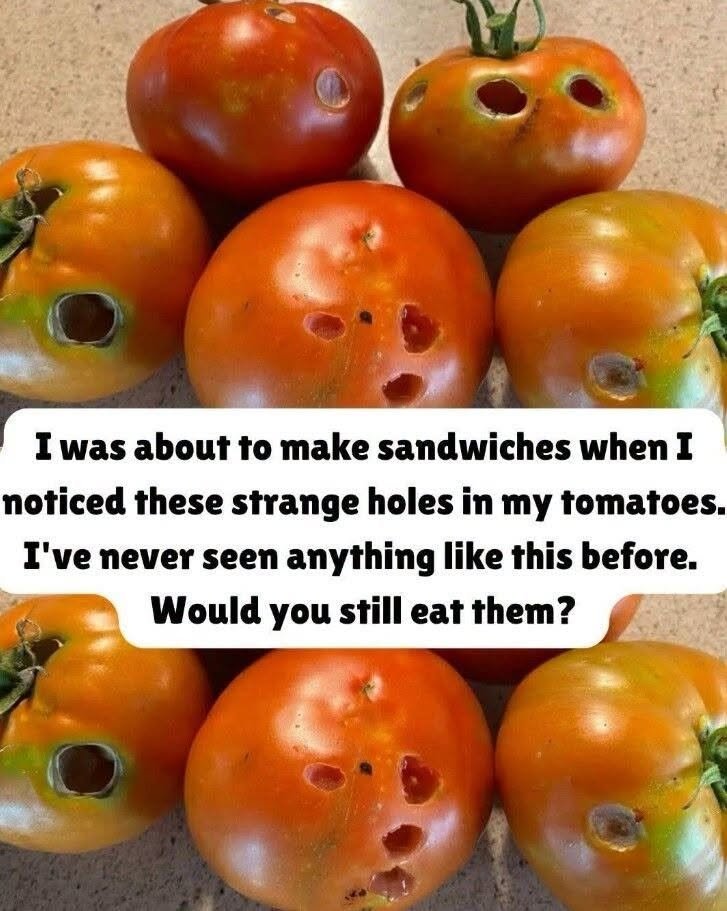
Remove Seriously Damaged Fruit
Gardeners sometimes hesitate to remove damaged tomatoes because they don’t want to waste something they worked hard to grow.
But leaving severely damaged fruit hanging on the plant isn’t always helpful.
A tomato that has been opened by an insect or animal can become more vulnerable to secondary deterioration. Once the protective skin has been broken, microorganisms and other pests have an easier route into the fruit.
If only a small portion is damaged and the rest of the tomato remains firm and healthy, gardeners may sometimes salvage the unaffected portion after carefully removing the damaged area. However, any tomato showing significant decay, mold, or questionable spoilage should be discarded.
When in doubt, it is better to sacrifice one tomato than risk consuming spoiled produce.
Don’t Spray Before You Know the Problem
One of the biggest mistakes gardeners can make is treating first and identifying the problem later.
Different pests require different strategies, and broad pesticide use can affect beneficial insects as well as unwanted pests.
For example, UC IPM recommends conserving natural enemies of hornworms and avoiding disruptive pesticide treatments when they are unnecessary.
For home gardeners, the first line of defense can often be simple observation and physical removal.
If you eventually decide that a treatment is necessary, choose a product specifically labeled for the crop and pest, and follow the label’s instructions carefully—especially regarding harvest intervals.
Encourage Natural Garden Helpers
A healthy garden is home to more than the insects that damage plants.
Beneficial insects and other natural predators can help keep pest populations under control. Avoiding unnecessary broad-spectrum treatments can help preserve these natural allies.
This is particularly relevant with caterpillar pests. UC IPM notes that naturally occurring parasites can attack hornworm eggs and larvae, providing an important form of biological control.
Rather than trying to eliminate every insect from the garden, a better goal is often to maintain a reasonable balance.
Physical Barriers Can Protect Ripening Tomatoes
If birds or other small creatures are responsible for the damage, physical barriers can be particularly useful.
For example, breathable mesh bags can be placed over individual fruits to create a physical barrier against some insects, slugs, snails, and birds. The bags need to be large enough to allow the tomato to continue growing and should be secured carefully around the stem.
For larger wildlife problems, stronger barriers may be necessary.
The advantage of physical protection is that it reduces reliance on chemical treatments while directly preventing pests from reaching the fruit.
Keep the Garden Clean
Good garden hygiene can also make your plants less attractive to pests.
Remove heavily damaged fruit, clear away fallen produce, and keep an eye on overripe tomatoes. Fallen or rotting fruit can attract insects such as picnic beetles.
University of Minnesota Extension specifically notes that picnic beetles are associated with overripe, rotting, or damaged tomatoes.
Regular harvesting is therefore more than simply a way to collect your crop. It can also help reduce opportunities for certain pests to establish themselves around your plants.
A Simple Tomato Inspection Routine
You don’t need to spend hours every day inspecting your garden.
A quick routine can make a big difference.
Start by examining the newest and ripening fruit. Look for fresh holes, discoloration, or soft areas.
Next, inspect the leaves. Look for missing sections, caterpillar droppings, eggs, or unusual chewing patterns.
Then check around the base of the plant. Slugs and other nighttime pests may hide in damp areas, under mulch, or beneath leaves.
Finally, if you notice new damage, inspect the garden again after sunset. Some pests are much easier to identify when they are actively feeding.
The more frequently you inspect the plants, the easier it becomes to notice a problem before it becomes widespread.
Does One Hole Mean the Whole Harvest Is Lost?
Absolutely not.
A few damaged tomatoes are a common frustration for home gardeners, but they don’t necessarily indicate a major infestation.
The important thing is to determine whether the damage is isolated or increasing.
If you find one damaged tomato and no other signs of pests, continue monitoring the plant.
If you suddenly find numerous tomatoes with fresh holes, extensive leaf damage, caterpillars, slime trails, or other evidence of feeding, then it is time to investigate more thoroughly and take appropriate action.
Recent extension guidance also emphasizes that identifying the actual cause is important before deciding how to treat the problem.
Conclusion :
Finding holes in your tomatoes can certainly be discouraging, especially when you’re looking forward to harvesting a beautiful crop. But the sight of a damaged tomato doesn’t automatically mean your garden is failing.
Tomato holes can have several causes. Caterpillars such as tomato fruitworms and hornworms may chew into the fruit, while slugs and snails can create irregular feeding damage. Birds and other animals may also take bites from ripe tomatoes. In some cases, what appears to be an insect hole may actually be related to fruit development, rot, or another non-pest problem.
The best response is to slow down and investigate before treating. Examine the shape and location of the damage, inspect the leaves, look for droppings or slime trails, and check the garden at night if necessary. Once you know what you’re dealing with, you can choose the simplest appropriate solution.
And remember: gardening is rarely about achieving a completely perfect harvest. A few holes are part of the challenge of growing food outdoors. With regular inspection, good garden hygiene, physical barriers when needed, and thoughtful pest management, you can often protect most of your crop without turning your garden into a chemical battlefield.
So the next time you discover a mysterious hole in a tomato, don’t panic. Treat it as a clue. Your garden is giving you information about what is happening, and with a little careful observation, you can usually figure out who’s been enjoying your tomatoes before you got there.