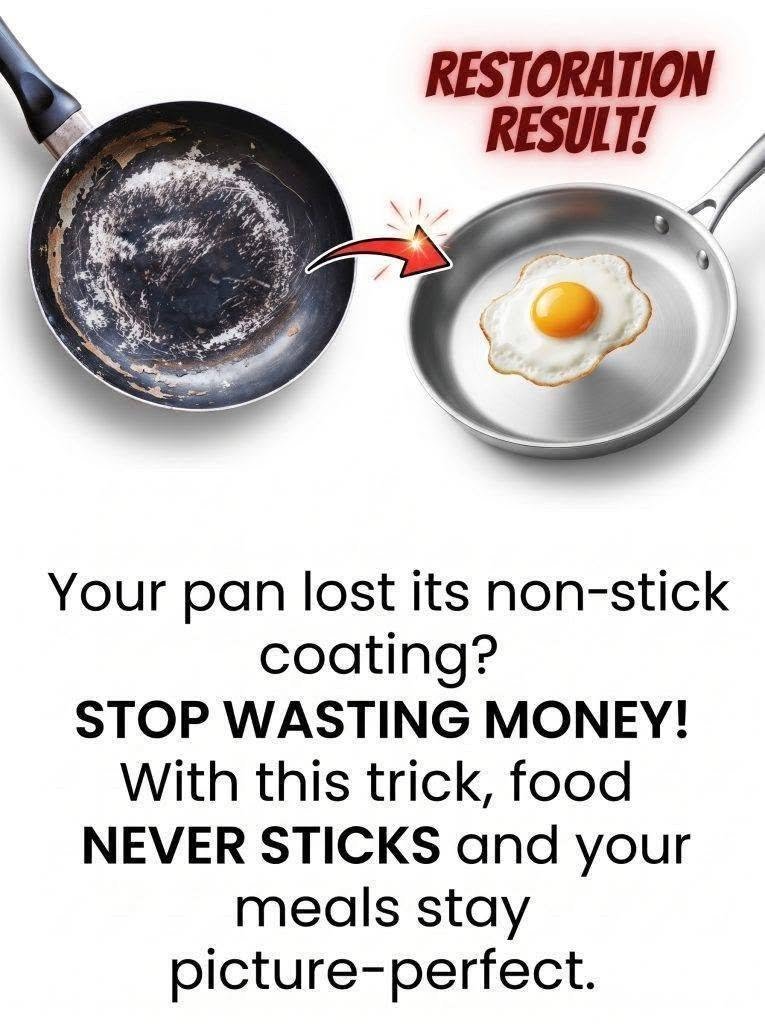
A well-used pan can start looking hopeless. Burnt-on food, greasy residue, dark stains and years of cooking can make even a good pan look like it’s ready for the trash.
But before throwing it away, take a closer look.
In many cases, you can clean and restore the cooking surface of a pan and make it perform much better again. However, there is one important distinction: if a non-stick coating is genuinely peeling, flaking or badly scratched, no homemade trick can safely recreate that coating. In that situation, replacing the pan is usually the better choice.
Here’s how to restore different types of pans safely.
Step 1: Identify What Kind of Pan You Have
Before reaching for a powerful cleaner or abrasive scrubber, determine what the cooking surface is made from.
A stainless-steel pan can usually tolerate more vigorous cleaning than a non-stick pan.
Cast iron requires a different approach because it has a seasoning layer that you want to preserve.
A coated non-stick pan requires the most care because aggressive scrubbing can permanently damage its coating.
Knowing the material is the first step toward restoring it without making the problem worse.
Step 2: Start With Warm Water and Dish Soap
If the pan simply has stuck-on food or grease, begin with the gentlest method.
Fill the pan with warm water and add a small amount of dish soap.
Let it soak for 15–30 minutes.
Then use a soft sponge or non-abrasive scrubber to loosen the residue.
For stainless steel or other durable cookware, you can use a more suitable scrubber if necessary. But avoid aggressive abrasives on non-stick surfaces.
Sometimes a little patience works better than trying to scrape everything off immediately.
Step 3: Deal With Burnt-On Residue
For a stainless-steel pan with stubborn burnt food, add enough water to cover the affected area.
Bring the water to a gentle simmer for several minutes.
Turn off the heat, allow the pan to cool enough to handle safely, and then loosen the softened residue with a suitable sponge or scraper.
For particularly stubborn stains on stainless steel, a paste made with baking soda and water can help with surface cleaning.
see continuation on next page